

KURUMAN
Victor Mulangisi
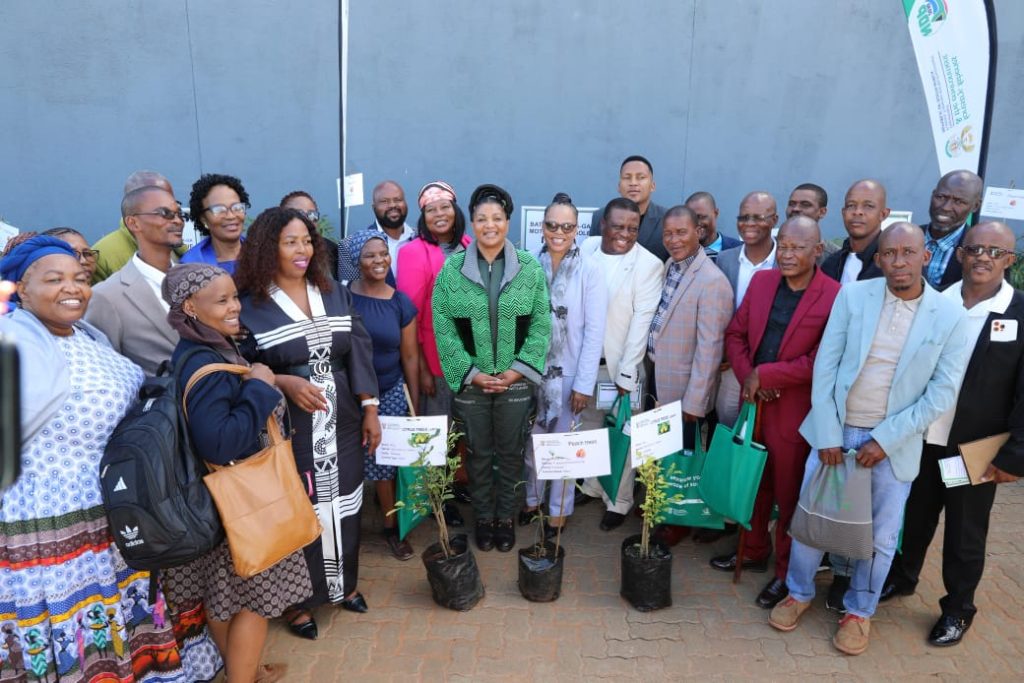
The Deputy Minister of Forestry, Fisheries and Environment visited Kuruman on 16 April 2026 with the primary aim of launching an E-waste recycling project – a first in the region and the province.
Electronic waste management is a pilot project that is a multi-faceted initiative seeking to reduce environmental pollution caused by the wanton disposal of electronic gadgets in undesignated areas such as landfill sites and to create employment. Electric and electronic products can be reclaimed and sold to the relevant sectors, which can recycle them and turn them back into finished products.
The Deputy Minister Bernice Swarts said that the increasing use of electrical and electronic equipment has resulted in large volumes of discarded devices, many of which contain hazardous substances that pose serious risks to human health and the environment if not managed correctly.
She said that South Africa generates more than 360 000 tonnes of e-waste annually, yet only a small proportion is formally recycled. The prohibition on e-waste disposal in landfills, together with the introduction of Extended Producer Responsibility regulations, reflects the government’s clear intent to divert this waste stream towards recovery, recycling and reuse.
“Within the Northern Cape and particularly in municipalities such as Ga-Segonyana, waste management challenges are compounded by limited infrastructure and low levels of public awareness of e-waste recycling. This pilot project responds directly to these realities by establishing accessible collection systems while strengthening community participation and accountability.
The project is implemented through a partnership between the Department of Forestry, Fisheries and the Environment, the Northern Cape Department of Environment, the Ga-Segonyana local municipality and producer responsibility organisations. This collaborative approach enables better coordination across government spheres and ensures that implementation on the ground is aligned with national policy and regulatory frameworks.
Community involvement will be critical to the success of this initiative. Through the provision of drop-off points, collaboration with local SMMEs and targeted awareness activities, the department is working to embed responsible waste separation and recycling practices at the household level.
To this end, the department has supported waste-recycling enterprises, such as EE-Phepha, that received funding from the department. Working with industry and other role-players, the department wants to increase the number of enterprises supported in waste management, circular economy and extended producer responsibility (EPR).
The Deputy Minister said that this pilot project also supports the objectives of the National Waste Management Strategy and advanced provincial priorities to reduce waste to landfill, to increase recycling rates and to promote inclusive economic growth. Importantly, it provides a model that can be adapted and replicated in other Northern Cape municipalities.
Progress will be monitored through clear indicators, including e-waste collection volumes, levels of community participation and employment opportunities created. These lessons will inform future expansion and policy refinement.